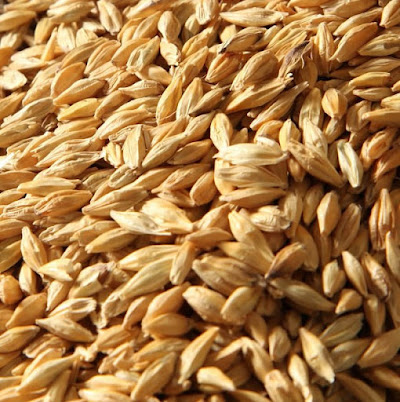
Prolamins present different names depending on the type of cereal from which are extracted. Prolamins in wheat which are known as gliadins, in barley as hordeins, in rye as secalins, and in oats as avenins are main triggering factor in celiac disease.
Barley prolamins are the main storage protein in the grain, and major protein in barley by-product. The barley prolamins, hordeins as the main storage protein fraction in barley seeds constitute approximately 50–80% of total grain proteins.
Hordeins accumulate in the starchy endosperm cells of developing barley grains, during grain filling. Hordein synthesis proceeds linearly from approximately 10 to 30 days post-anthesis.
Four sub-units are classified based on their electrophoretic mobilities, B-hordein of 35–46 kD, C-hordein of 55–75 kD, γ-hordein of less than 20 kD and D-hordeins of more than 100 kD.
B-hordein consists in the major fraction of hordein (70–80%) and are sulfur-rich. C-hordein it is the second most important fraction (10–20%) and are sulfur-poor. D-hordein considered a protein with high molecular weight (HMW) and γ -hordein (1%–5%) with the smallest polypeptides.
Scientists study the effect of B, C and D hordeins on malting quality of northern European barleys and found that the B fraction had some effect on malting quality through changing adjusting diastatic power.
The hordeins are amongst the triggers of coeliac disease (CD), a well characterized T-cell mediated disorder suffered by approximately 1% of most populations. In coeliac disease the immune system mounts an inappropriate reaction to particular peptide sequences in dietary gluten, reacting as if the gluten molecules were an invading microorganism.
Hordein – prolamin glycoprotein in barley